Sports Media Report
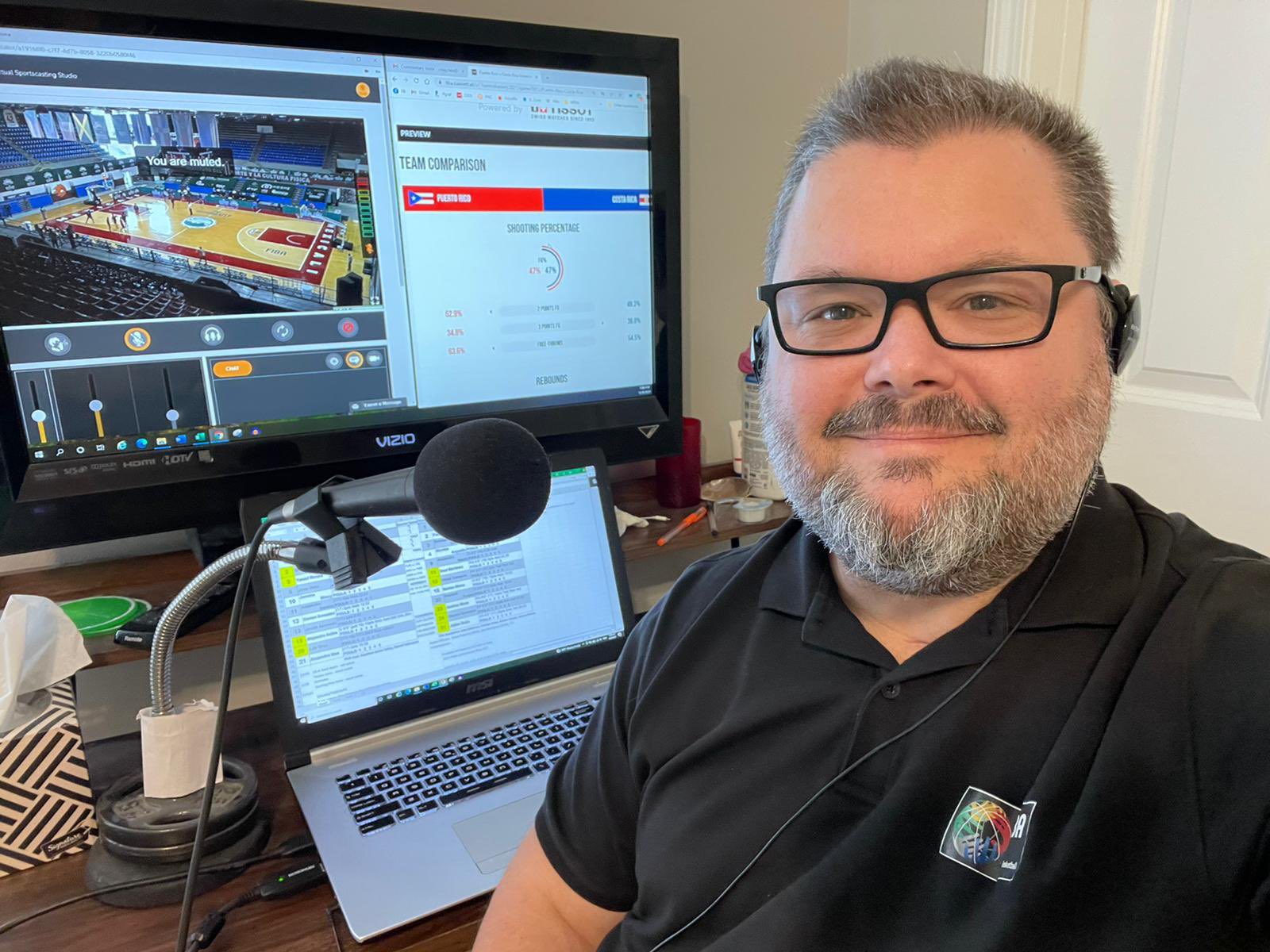
Here is a good trivia question; what announcing “platform” has more voices from around the world on its payroll? NBC? ESPN? FOX? DAZN? Eurosport?
Nope. It’s Spalk. Who? Well for those looking to broadcast the biggest and the most niche events in any language…or many languages…in real time using remote technology, a bit of AI and lots of hustle, Spalk has become the opportunity, literally of a lifetime. From NBA teams wanting to satisfy a fan base in Hindi, or a World Cup rights holder who wants to make sure they have the right voices literally speaking to their fans in their region in a non-native tongue, Spalk provides the tools and the answers. What used to sound like some lifeless voice yelling into the ether has now become a compelling addition to rights holders looking to generate revenue and interest no matter how niche the supporters may be. And for those with a passion for calling games a massive market has emerged without compromising the integrity of the match, or game.
How does it all work? We caught up with Ben Reynolds, co-founder and CEO of the company, to give us the play by play.
The idea of remote broadcasts is not new. How has Spalk changed the opportunity?
When it’s done properly, remote production is becoming an essential tool for scaling what’s possible with a league’s live broadcast without losing any of the originality fans crave. On the contrary, it is an expansion of originality. Before Spalk, if you wanted to add Spanish, Portuguese or Japanese commentary, you needed a truck, an onsite booth and a suite of technical and engineering staff. That has always limited expansion to the biggest events because the economics only work for the biggest leagues. With our Virtual Commentary Studio launching a new language or an alternate broadcast is no longer a major operational decision. Our partners can test a market, support a regional sponsor or serve a diaspora fan base without needing to rebuild their entire production.
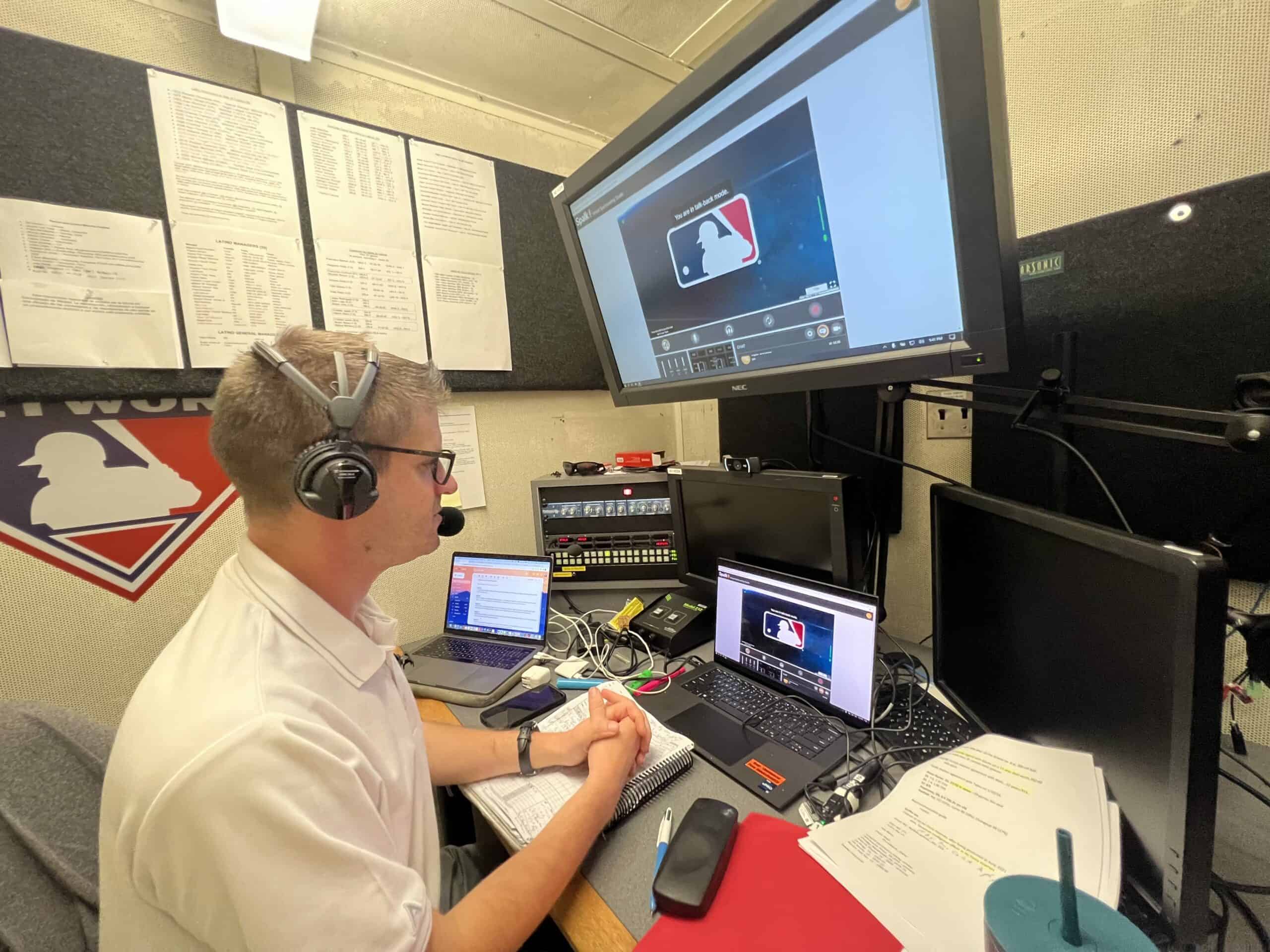
Do you worry that those who go fully remote lose a feel for being at the live event?
That is a fair concern but it really depends on how the remote commentary is actually done.
If you put someone in a room with a monitor, and say “good luck” you definitely lose something. When you build the workflow properly and give commentators access to things like live stats, make a Producer or Director available in the commentators headset and give them access before the game to interview coaches and players, then you’re replicating the experience exactly of being on site. In many cases our commentators are former athletes and coaches and are also deeply embedded in the sport. Their energy in the booth comes from knowledge and storytelling, not just physical proximity. We also offer a lot of flexibility to our partners. Some events are hybrid with one of the commentators onsite. Some are fully remote. We’re not ideological about tying customers to producing commentary from home and our technology is low latency enough that a commentator in venue and at home can work together on broadcast.
At the Miami GP, we had legendary Colombian F1 driver Juan Pablo Montoya joining the Spanish coverage for F1 for Apple TV from the Pit Lane while the rest of the commentary team was scattered across North and Central America. We are all about the best broadcast outcome for our production partner and their audience.
Some of the world’s biggest events have established state of the art hubs now. Who are your best partners?
Spalk supports more than 200 sports properties around the world with their content localization. Our partner list ranges from household names (NFL, Amazon Prime, Bundesliga & F1) to Olympic Federations (FIBA, FIVB, FEI & FIS) to leading production companies (TATA, Infront, MediaPro & Eurovision). We really enjoy the diversity and technical challenge that comes with supporting a global client base with content online 24/7. No two days are the same for Spalk – whether it’s relocating a client’s media workflows in real time due to missile strikes on AWS’ UAE datacenter (https://www.reuters.com/world/middle-east/amazon-cloud-unit-flags-issues-bahrain-uae-data-centers-amid-iran-strikes-2026-03-02/) or coordinating Starlink connectivity for a commentator in the mountains of Greece.
Sport is the language of the world and Spalk is the central piece of infrastructure our customers use to tell their stories.
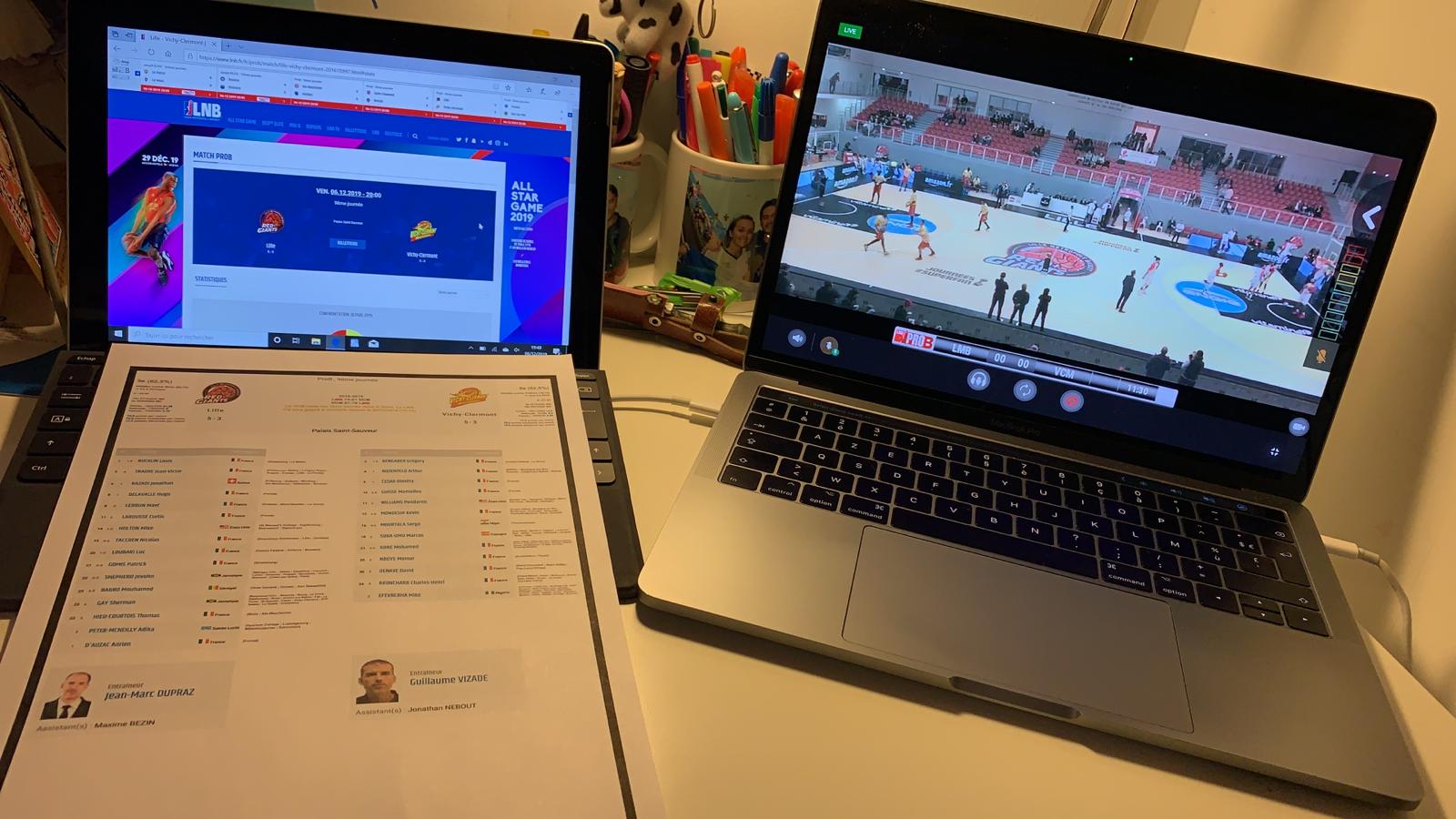
Multilingual broadcasts are a key part of this. Tell us about how you source announcers?
We recruit globally and have established a pool of >5,500 commentators in 52 languages that we can offer across more than 30 sports. Of course we have very strong depth in the more common sport & language pairings such as Spanish & Soccer (Football!) and US English & Baseball. But we have also worked on projects with some more niche language pairings such as Japanese Fencing coverage or Mandarin Triathlon commentary.
Our network spans professional broadcasters, former athletes and sport specific specialists across dozens of countries. When we are missing coverage on a specific event we will conduct market scouting which includes referrals, monitoring sport specific blogs and social media and direct outreach via LinkedIn, Instagram & Twitter and work with our rights partner to understand budget, style & demographics of their target audience to ID the best voice.
Quality control is very important to use. We provide onboarding, technical setup support and production guidance to commentators. Because our production model is centralized, we can support commentators in different time zones and deliver consistent standards.
The result for our partners is authentic local voices that can be contracted easily with guaranteed standards around audio & equipment quality.
Can you lay out the breath and scope of the business in terms of partners and voices?
In a mid-May 2026 week, commentators will work across 965 different sports broadcasts with Spalk. We are currently wrapping up the European Basketball and Soccer Seasons with Bundesliga, Ligue 1, Serie A & Euroleague keeping us especially busy!
It’s also NBA Playoffs – where we have been supporting up to 7 languages of commentary for our partners around the globe – and MLB is in full swing where a number of Minor and Major league teams are using Spalk for Spanish coverage for their Radio and RSN partners.
The spring season brings many new sports online such as cycling, Track & Field, triathlon, Beach Volleyball World Tour, SailGP and an assortment of other global sports properties.
Of course we also have an eye towards the FIFA World Cup where Spalk is producing 37 languages of commentary for broadcast customers around the world.
What has surprised you most since you launched the business?
There is ALOT of sport going on everywhere around the world, every single day.
When we started Spalk in New Zealand my frame of reference was relatively narrow. Rugby and cricket dominated local TV coverage and then maybe you could watch a few major global properties like the NFL and the EPL.
Today, if you flick on ESPN any time of day, you’ll find dozens of colleges, professional sports leagues & Olympic Federations broadcasting their Championships, World Cup Qualifiers & countless other hours of live events.
Tools like Spalk had lowered the entry point to produce entertaining, high quality coverage. This has opened up countless more sport properties to look to build their fan base through their broadcast. The sports fan at home ultimately wins because you’re able to follow your sport wherever you are!
How does the revenue stream work for partners who come on board?
Spalk charges a SaaS fee for using our technology + an additional fee if you contract a commentator through our talent marketplace.
In return, our partners are using Spalk to open up new fan bases for their content. This, in turn, drives commercial outcomes through advertising and increased value of broadcast rights for the sports league or rights holder.
To give you an example; in 2020, the Japanese B-League (Top Professional Basketball League in Japan) signed Filipino Superstar Player, Thirdy Ravenna. The B League used Spalk to produce Filipino commentary which we distributed on Facebook Live to understand audience demand in the market. After attracting >1million views on his matches in The Philippines, a Filipino TV Network bought rights to all matches and Spalk scaled our production to add Filipino commentary across a wider pool of matches. Since then, the B League has added English and Mandarin commentary via Spalk and seen similar success with global broadcast deals in China and across South East Asia.
What the biggest challenge in scaling the company?
To rework a quote from legendary Liverpool FC manager Bill Shankly “Some people believe [live sports television] is a matter of life and death, I am very disappointed with that attitude. I can assure you it is much, much more important than that..” Operationally, scaling a global company like Spalk where we have content live around the world, 24/7 has been a huge undertaking. The technology has been optimized for low latency & resilience – everything runs with hot backups and failovers. For Production Operations, we have 24/7 coverage from sites in Mexico City, Manchester & Melbourne. Failure isn’t an option and our internal success delivery metric DIFOTEF (Delivered In Full, On Time, Error Free) is the first report I open every Monday morning.
Is the biggest opportunity for emerging properties or legacy ones…or a little bit of both?
It is both, but for different reasons.
Emerging properties use Spalk to punch above their weight. They can launch international feeds without any CAPEX cost and low operational overhead.
Legacy properties use us to deepen penetration in secondary markets, test new languages or add digital only commentary options. We are never going to replace Joe Buck and Troy Aikman onsite, but we can make it affordable to produce a Romanian, Arabic, Dutch & Xhosa broadcast for the first time!
We have seen women’s sports explode in recent years…is there a challenge or an opportunity in identifying women around the world to join Spalk as voices?
At the FIFA Women’s World Cup in 2023, Spalk produced 14 languages of commentary with a full lineup of female voices.
For many of the teams from more traditional countries, this was the first time that their national soccer team had their match broadcast by a completely female commentary team. I’m incredibly proud we can support efforts like this!
We’re constantly on the lookout for talented voices who are engaging with fans in new and different ways. Some examples include Team USA Volleyball Star, Ci Michael, who produces amazing behind the scenes content of her commentary to engage volleyball fans (https://www.instagram.com/p/DV5AYC7Dcx-/?hl=en) and athlete creators like Ilona Maher who are bringing new people to the sport.
At the end of the day, it’s all about the fan and wetting their appetite however we can with new and different voices, content formats and styles.
With World Cup, Olympics etc on the horizon, where do you see the business in the next few years?
The big global events are important to us, but they are not the whole story.
Yes, each year we are taking on more complex productions. In the Spring of 2026, everyone is talking about FIFA World Cup and Spalk will be right there supporting the delivery of 37 languages of coverage for broadcast partners around the globe. These complex, global projects challenge the organization to think bigger and operationalize perfection.
At the same time, a huge part of the opportunity sits below the headline events. Leagues, colleges and broadcasters have the same production standards as a World Cup, just delivered in a way that makes sense for their scale.
Spalk has become part of the underlying infrastructure of international commentary. Alongside that, we are continuing to innovate with our customers around broader language coverage, smarter workflows and AI assisted tools that support commentators rather than replace them.
When a sports property decides it wants to reach a new market, adding that feed should not feel like a major project. It should feel straightforward. Fast to launch, commercially viable and high quality from day one. Spalk is striving to be the best partner to deliver that.